Monday, August 22, 2016

Unit 1: Science is...

Unit Information
Unit 1 Goals and Resources [what is this?]
Unit 1 Vocabulary [what is this?]

Neil deGrasse Tyson, a famous astrophysicist, says we have been scientists since birth; and that science is in our DNA. But WHAT EXACTLY does it mean to be a scientist? What's more, WHAT IS SCIENCE? We will explore these two main ideas in this short introductory unit to Science 6 at AISB!


Thursday, June 2, 2016

Powerful Ways to Hook Your Audience

Check out Ms. Birzu's ideas for powerful ways to hook your audience. Consider using one in your presentation.

Role-Play
Perform a short skit.

Ask a few rhetorical questions
"How do you explain that this school pays a lot of money on energy bills? Have you ever thought of how much  energy is wasted in schools all over the world every year? Given how fast we run out of non-renewable resources, don’t we all deserve to save money instead of paying too much on electricity?”


Start with shocking data/statistics
“50.2% percentage of energy is wasted by the US economy every year”


Use the word “imagine”

“Please close your eyes and imagine you are walking the hallways. You are noticing empty classrooms. You’re also noticing lights that are turned on. Lots of lights. Imagine you could get involved. Now open your eyes. What about switching from using light bulbs to sensors?


Arouse curiosity
“I need to make a confession. My parents often do something at home that they are not proud of, something that in many ways I wish I will never do as an adult, but I feel I have to reveal that with you here. Several times every day, my parents leave the lights on in rooms where they don’t stay for long periods of time. And, yes, I’ve noticed teachers do the same in our school.”


Take the audience through a "what if" scenario.
“What if at the end of the month you will have more money left in your school account after paying the electricity bill? What if you could actually use that money to invest in teaching materials or...books for the library instead?”


Tell a story

“Linda is a 10-year old girl living in a poor village in Colombia. She lives with her parents and her 7 elder brothers. Linda tries hard to do her school work at home. However, it is not easy for her to work on it when parents decide to turn off the lights in the house to save energy. They can’t afford to pay the monthly bills. They use energy for 2 hours only. Two hours a day. Two hours every day. …….”

Wednesday, June 1, 2016

Presenting Data in Your Presentation

We've learned this year that adding data in the form of a chart can make a big impact on your audience.  To make that impact even stronger consider the way you describe a chart.

Our language expert, Ms. Birzu, has some great tips to help you explain data in your presentation.


Explaining a bar graph/chart/pie chart


INTRODUCTION:
This …(pie chart/bar graph etc.).... indicates/shows ….(how much/how long/how often/how many etc -use words from the chart titles)... .


FINDINGS:
You can see that …( ex: a larger proportion of teachers leave lights on../lights are on in 6th grades classrooms most of the time/most 6th graders recycle bins for plastic and paper/most hand towels are EQUALLY used to dry hands and other purposes etc .etc.).....


In contrast, ….( (here you COMPARE  the small percentages; ex: a small number of teachers turn lights off.../ less lights are turned off, which is a percentage of only 20.8%).. , whereas …(here you talk about the smallest number/percentage; ex: only 17% represent …).


However, …(here you talk about contrasting numbers/percentages)...


CONCLUSION:
As you can see, …(say a conclusion about what the survey/bar graph shows).


Overall, we can see that….(conclude by saying the purpose of your project; ex:  our school can save a lot of money if we instal sensors, etc.).


HELPFUL WORDS for describing graphs
  • UP – Verbs rise, increase, grow, go up, improve, jump, surge, shoot up , soar, rocket
  • UP – Nouns a rise, an increase, growth, an upward/rising/increasing trend, an improvement, a jump, a surge
  • DOWN – Verbs fall, decrease, drop, decline, go down, slump, plummet
  • DOWN – Nouns a fall, a decrease, a decline, a downward/falling/decreasing trend, a slump
  • NO CHANGE – Verbs remain stable/constant, stay at the same level, stabilize
  • FREQUENT CHANGE – Verb fluctuate
  • FREQUENT CHANGE – Noun – fluctuation
  • AT THE TOP – Verbs reach a peak, peak., reach its/their highest point
  • AT THE BOTTOM – Verbs reach/hit a low (point), hit/reach its/their lowest point


TO SHOW CHANGE
Adjectives:
  • dramatic, considerable, sharp, significant, moderate, slight, sudden, rapid, steady, gradual, slow
Adverbs:
  • dramatically, considerably, sharply, significantly, moderately, slightly, suddenly, rapidly, steadily, gradually, slowly
Prepositions:

  • a rise from HUF 725 to HUF 1100
  • to increase by 2.1 %
  • an increase of 2.1 % energy saving

Tuesday, May 31, 2016

Presentations: 3 Ways to Add Impact

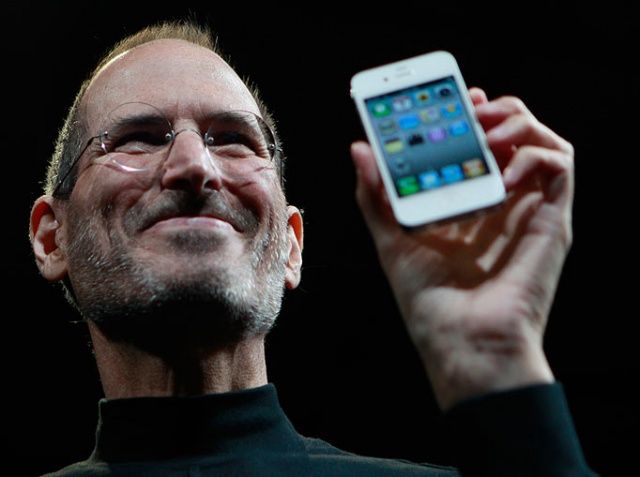
Steve Jobs transformed the world of computing and mobile communications.  It is clear that Mr. Jobs had the ability to make a true impact on his audience.  Watch any Apple unveiling event, and you can see the art of presentation at its best.

Image: Cult of Mac
When giving a presentation you want to impact your audience with the most important information.  You worked hard to find this information.  Your goal is to get your audience to clearly understand and maybe even take action on some you are presenting.

But how can we add the more impact to our presentations?

There are many ways.  Here are 3 ideas that can transform a presentation into something that could have a lasting impact:
  1. The Way You Look Impacts Your Audience: YOU are the most important feature of your presentation, not your slides.  What you wear should match the style of your presentation.  Keep a good energy with your audience and positive body language throughout the presentation.  Think of a Steve Jobs Apple presentation.  If you know and believe in your main idea, show it in how you present yourself in front of your audience.  
  2. Image: humberlife.com
  3. Images Carry More Impact Than Text:  Less is more. Visuals make it almost 7 times more likely that someone will remember your presentation.  Also, research shows people can't read your slides and listen closely at the same time.  Think of the main idea you are trying to present and allow your images, graphs or words on the screen to support this. 
    Image: PowToon
  4. Stories Make Impact: Focus on the story you want to tell.  Find a clear beginning, middle, and end that builds to a conclusion.  Thinking of your presentation as a story is not only a great way to stay organized, but a great way to engage your audience.    
    Image: Wienot Films


Tuesday, May 17, 2016

PROJECT DETAILS: Sparking Change at AISB


The most powerful weapon on earth is the human soul on fire.
-Ferdinand Foch


A spark has great potential to make a change.  Your challenge in our last project of the year is to spark a change at our school...with an idea.  


This year we explored matter and energy in various ways.  In this project you are challenged identify and help to solve a problem by considering how our school uses energy.


The driving question for this project is:


How might we change actions, systems, or objects
in our school to reduce the amount of energy
that we consume in one year?


You will create a proposal of an idea related to this question that will be presented to a principal, school business director, school director, or school board member at our school.  Your finished project must include, but is not limited to:


  1. A conceptual model of idea - This could be in the form of physical models, labeled diagrams or detailed drawings.
  2. A written proposal to give to your audience on the day of the project.  Using your best persuasive writing and mathematical problem solving skills the group must complete a written proposal that:
    1. outlines the need for the solution
    2. explains the solution (should include models)
    3. outlines the costs and benefits of the solution showing essential mathematical models that prove the validity of your idea
  3. Well-planned and rehearsed presentation 5-7 minutes in length that includes all group members in some way.