Showing posts with label video. Show all posts

Monday, August 22, 2016

Unit 1: Science is...

Unit Information
Unit 1 Goals and Resources [what is this?]
Unit 1 Vocabulary [what is this?]

Neil deGrasse Tyson, a famous astrophysicist, says we have been scientists since birth; and that science is in our DNA. But WHAT EXACTLY does it mean to be a scientist? What's more, WHAT IS SCIENCE? We will explore these two main ideas in this short introductory unit to Science 6 at AISB!


Tuesday, May 31, 2016

Presentations: 3 Ways to Add Impact

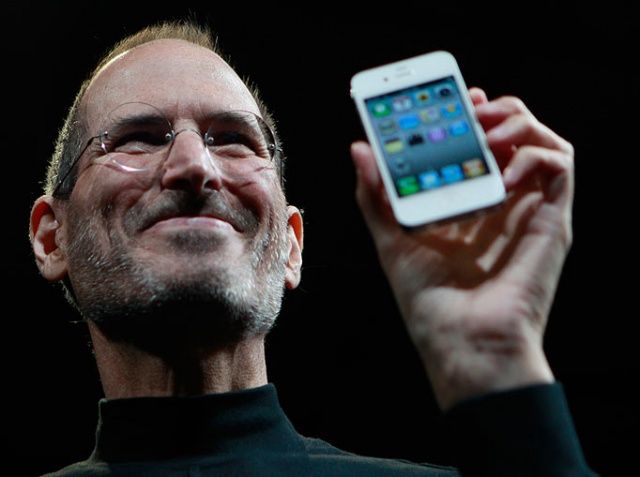
Steve Jobs transformed the world of computing and mobile communications.  It is clear that Mr. Jobs had the ability to make a true impact on his audience.  Watch any Apple unveiling event, and you can see the art of presentation at its best.

Image: Cult of Mac
When giving a presentation you want to impact your audience with the most important information.  You worked hard to find this information.  Your goal is to get your audience to clearly understand and maybe even take action on some you are presenting.

But how can we add the more impact to our presentations?

There are many ways.  Here are 3 ideas that can transform a presentation into something that could have a lasting impact:
  1. The Way You Look Impacts Your Audience: YOU are the most important feature of your presentation, not your slides.  What you wear should match the style of your presentation.  Keep a good energy with your audience and positive body language throughout the presentation.  Think of a Steve Jobs Apple presentation.  If you know and believe in your main idea, show it in how you present yourself in front of your audience.  
  2. Image: humberlife.com
  3. Images Carry More Impact Than Text:  Less is more. Visuals make it almost 7 times more likely that someone will remember your presentation.  Also, research shows people can't read your slides and listen closely at the same time.  Think of the main idea you are trying to present and allow your images, graphs or words on the screen to support this. 
    Image: PowToon
  4. Stories Make Impact: Focus on the story you want to tell.  Find a clear beginning, middle, and end that builds to a conclusion.  Thinking of your presentation as a story is not only a great way to stay organized, but a great way to engage your audience.    
    Image: Wienot Films


Friday, February 5, 2016

Unit 4: Rocks, don't take them for granite - Geologic Time


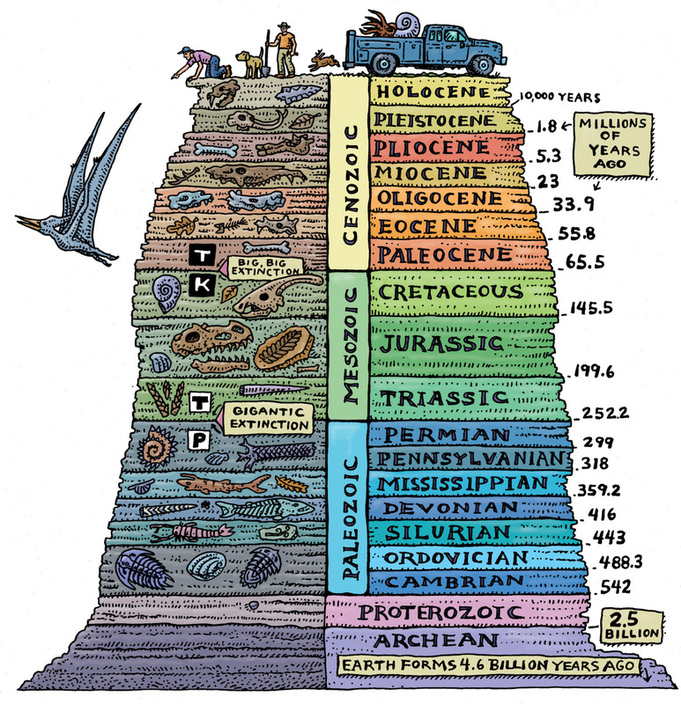
This question has started a debate of *when* in time we are living---meaning, where on the geologic time scale do we find ourselves right now?

The Basic Geologic Time Scale Based on Rock Layers

If you have not heard about this mother of all timelines, the geologic time scale is divided into units based on events which took place in Earth's 4.6 billion-year-old history.  Boundaries in the timeline are decided by major changes in rock layers.

Many people agree that we are currently in the Holocene Epoch, in the Quaternary Period, in the Cenozoic Era in the Phanerozoic Eon.  The Holocene Epoch began right at the end of the last ice age over 11,000 years ago.  It was during this time we can see major changes in rock data. 

However, according to some scientists at the International Union of Geological Sciences we have now left the Holocene epoch and now are in a NEW epoch called the Anthropocene.  Anthropo meaning "man" and cene meaning "new."


Scientists say that humans have made such an impact on our planet that we can see it in the soil.  For example, if we look at rock layers worldwide, we would find a change in the radioactivity in the soil in 1964.  It was during this time when nuclear weapons were being tested.  Some scientists use this and many other indicators as evidence that we have permanently changed the planet in such a way that we have brought about a new epoch.

In this upcoming unit we will be looking at rocks for evidence to the past.  We will be asking questions like how does the Earth change over time and how can rock types and rock layers be clues to the past?  We will look at landforms and study how erosion and plate boundaries have changed our earth over time.  

Hopefully by the end of this unit, we will gain a better understanding of not just where we are in the universe, but WHEN we are in time.

Read more about the Anothropocene on Science News for Students


Sunday, March 16, 2014

Screencasting Chrome App: Easily Share Your Screen with Snagit

Ever want to share something you're doing on your computer?  You've seen videos like this and know they can be effective ways to learn and share.  You may even have thought about making one, but figured the time that it takes to produce something like this might not be worth it in the end.

Quick videos explaining a website or Google Doc can be an effective way communicate ideas to friends, with a class of students or to colleagues.


Screencasting has been around for a while now, but a new experimental option in the Chrome Snagit app makes sharing ideas easier--and you can try now for free.*  The only thing you need is a Chrome Browser.

The initial setup takes a few steps.  Once you've set things up, sharing anything you do on your computer is relatively quick and easy.  Your captures are ready to share to Google Drive or YouTube as soon as you finish your recording.

If you're ready to check it out, here are some steps to get you started:

From Chrome, download BOTH Snag It App AND Extension in Chrome App Store

Once installed find settings on the top right corner of the Chrome App

Tick box to Enable experimental features

Go back to the library and you will now find a "New Screen Recording"option to start your screencast

The first time you use this feature, you will have to enable screen capture.  The app will automatically explain a list of steps or you can do it yourself by typing chrome://flags in the address bar.


Now you're ready to record and share!  Sharing options appear after your video processes.


*Traditionally Snagit has come with cost, at least for now TechSmith doesn't mention cost for this in-Chrome feature.  If you are looking for a tool that allows for capturing outside of the browser and is free use (with limits) there are a number of good tools out there.  I've found Jing to be a good one.


Friday, January 31, 2014

Chem Experiments: Dry Ice Bubble

Check out this dry ice bubble made by Niekz21 and the 6.2 science group:


Logged in AISBers can see more

Saturday, January 25, 2014

Water Cycle Presentations

Check out what other groups said about the water cycle---including this one from 6.4, and these ones from 6.2 group 1 and group 2.  Be sure you are logged in to your AISB Gmail to view.


Monday, September 30, 2013

Design Thinking - Intro & Empathize

What is design thinking?  How can this type of thinking help us do science together?


What does it mean to empathize?  How can this be important in creating new things?


Thursday, April 28, 2011

Tornadoes Presentations

Here are some of the presentations showing what we are learning about Tornadoes:

Class 1

Class 2

Thursday, April 14, 2011

2011 Phun Projects

Here are some featured projects from our Phun project. Enjoy!

Monday, April 11, 2011

OK Go Video From Class

Design Squad Videos

This is a new show based on engineering and the design process.

Check out the site for full episodes.

Watch it to get ideas for your invention, or maybe just watch it for fun ;)

The Design Process Lesson

Friday, November 5, 2010

Digital Story: Unimaginable Success

A digital story version of the story of "Three Cups of Tea" that we were reading and discussing in class this week. I created this for a project for my graduate school program.

Thursday, April 8, 2010

The Design Process

Here are the slides from the design process presentation from class on 4/1.

Friday, March 19, 2010

Tuesday, January 5, 2010

Fun With Food Podcasts


Our class just finished a unit on the science behind food. The students were given the assignment to research topics related to food. They were then told to create a Podcast with their research to present findings in a creative way.

Listen to our podcasts here

Wednesday, November 4, 2009

Everest: Beyond the Limit


Here is a link to the site we visited in class today - Everest Interactivies


Homework Question:
Considering the video we watched today write at least one paragraph answering the question:

Is climbing to the top of Mt. Everest worth the cost?  Why or why not?


Make sure if you post your comment to this blog entry and include your name with the post in the Name/URL section. See example post from "Bob."