Monday, January 16, 2017

Unit 4: Reaction Action - Chemical Changes

Unit Information:


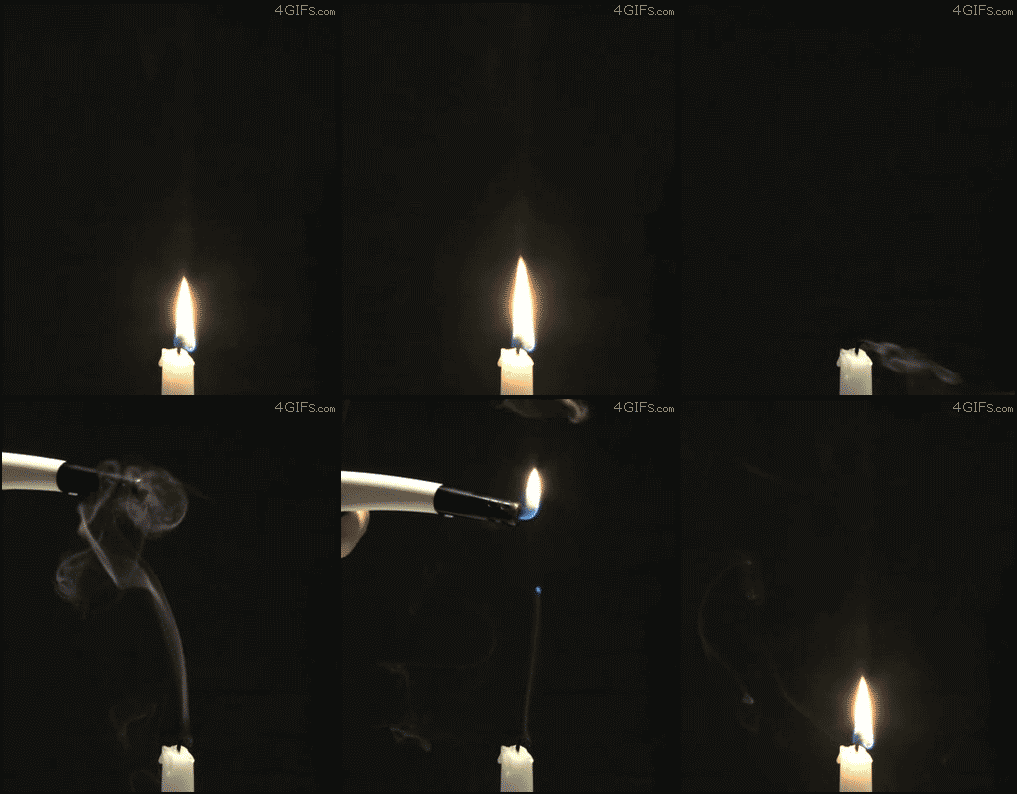
BOOM!  SIZZLE!  POP!

Science is a study of change.  Many people might agree that some of the coolest changes are caused by chemicals interacting with each other.

You may not think about it but, chemical reactions are happening all the time all around you---even INSIDE of you.  During this unit we will explore chemical reactions, what they are, how they work and how they keep the world going.  


Find other chemical reaction gifs like this check out reddit.com

Friday, November 25, 2016

Thermal Energy Experiment


In this project each student will design and carry out her or his own experiment with following goal in mind:
Plan an investigation to learn about the relationships between energy moving from one place to another, the type of matter, the mass, and the change in average kinetic energy of the particles. Average kinetic energy should be measured by temperature in Celsius. (NGSS MS-PS3-4)
Project guides and resources (all shared on Classroom for students):

Lab Report Template
Lab Report Example - Mixing Colors Experiment
Experiment Assessment Rubric - Five Areas of Feedback Graded on a 1-7 Scale (Marked in Veracross)

Thursday, November 10, 2016

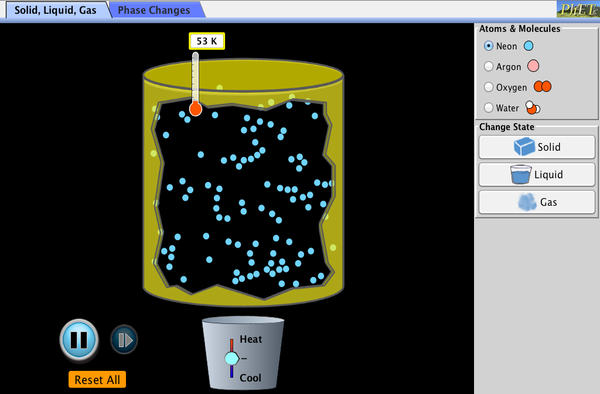
SIMULATION: Sold, Liquid, Gas

States of Matter: Basics
Click to Run

After clicking above, you may need to Open your Mac's "Security & Privacy" settings and "Open anyway." (See screenshots below)  You also might need to download Java.

Saturday, November 5, 2016

Unit 3: Messin' More With Matter - Physical Changes

Unit Information:
Unit 3 Goals & Resources
Unit 3 Vocabulary Help (Quizlet Set)

Shape shifting into multiple forms, growing in size in the cold, dissolving many things on the planet just by touching it, and defying the pull of gravity.

It has been the source of transportation for centuries, and wars have started over it; yet, you can find it in your house and it even makes up most of you.


The substance is known by some as H2O, but most people just call it---water.


Water is pretty amazing stuff!  Did you know it's one of the only substances that is less dense in its solid state than it is in its liquid state?   This video explains this in depth:


Our next unit is about the changes that happen to matter when thermal energy is added or taken away.  Often we will use water as an example because it is the only substance on Earth that naturally occurs in a solid, liquid, and gas state.

Who would have thought that something so ordinary was so unique!?!

Thursday, September 29, 2016

Unit 2: What's the Matter?

Unit Information:
Unit 2 Goals & Resources
Unit 2 Vocabulary Help

Why is it so important to understand the very, very small things in our world?

In the book Napoleon's Buttons: 17 Molecules That Changed History the author explains how Napoleon Bonaparte, the French Emperor, was not able to move his army any further against the Russian army because of something very small---a button.  As the story goes: Napoleon's army had coats with buttons made from a metal called tin.  One of the properties of tin is that it breaks down when it becomes cold.
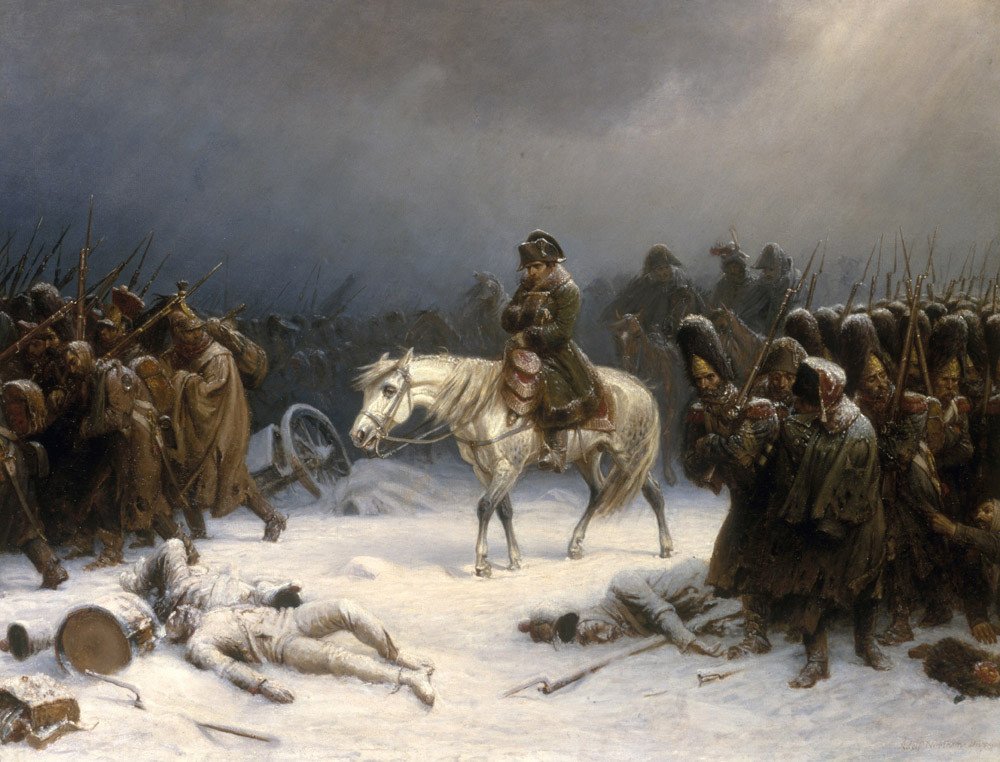
Napoleon and his Grande Armée, Retreating from Moscow

The author explains that during the cold Russian winter, the buttons on the French soldier's coats broke, opening them up to the cold.  Besides causing sickness, fighting without buttons might be difficult.
Tin button

We do know for sure that during the winter of 1812 the French Grande Army lost thousands of men and were forced to retreat.  From this point, France was never able to realize its vision of ruling over a huge empire and Russia would continue to remain free of foreign rule.
In this example of Napoleon's Army we can see that the understanding the properties of something as simple as the atoms in tin can make a huge difference in history.

Chemistry is the study of chemical elements (like tin, gold, helium, uranium, oxygen, etc.) and compounds (like water, sugar, carbon dioxide) and how matter like this changes.

One of the goals of this unit is to explore what matter is.  You will be given a chance in this unit to understand how our world works by analyzing the very small.

If the answers to many problems in our world are found in the very small, who knows where research and understanding atoms and molecules could eventually lead us?